Is production growth on the horizon, but are your current facilities already reaching their limits?
Many manufacturing companies reach a point where the existing production layout no longer supports further growth. Materials move unnecessarily long distances, production processes expand gradually without a clear overall concept, and every new order puts additional pressure on available space.
Without a clear vision for the future production layout costs are increasing for logistics, material handling, and investments.
Production Layout Vision provides insight into how to prepare the production system for future production volumes, new products, and the company’s growth over the coming years.
What situations does it help address?
production is running out of space
an increase in production volumes is planned
a production expansion or relocation is being planned
new production programs are being introduced
material flows are complex and difficult to manage
the necessary information for investment decisions is lacking
warehouse and production space is not being used optimally
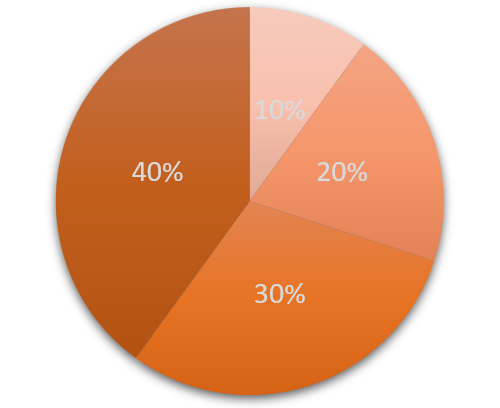
Planned sales
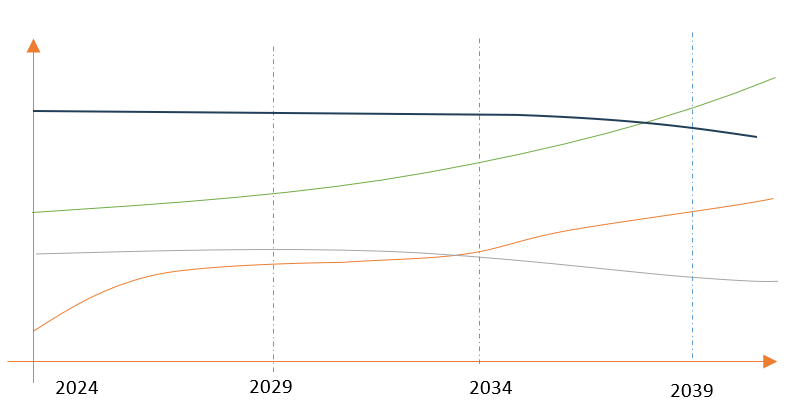
Sales development – forecasts
What does a production layout vision bring?
A clear understanding of future space requirements
Decisions regarding new production halls, warehouse facilities, or investments should be based on real data and expected production growth.
More efficient production and logistics flows.
An optimized production layout helps minimize unnecessary material movements, handling, and waiting times between processes.
Readiness for future growth
The production layout creates room for growth without the need for constant improvised changes.
A phased transformation plan
Instead of large-scale one-off interventions, a realistic roadmap is created to move from the current state to the target production layout.
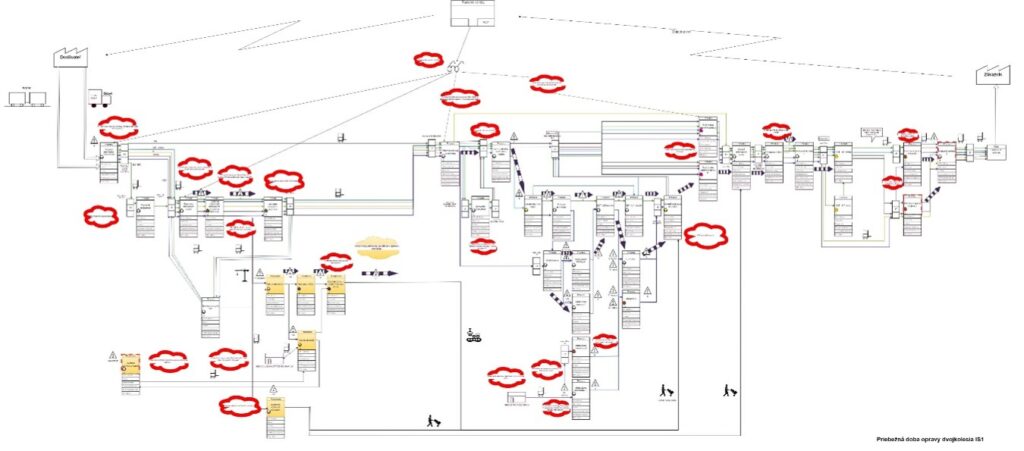
Defining the main production flows (value streams)
How is a production layout vision developed?
Current State Analysis
The production program, production volumes, workstation capacities, warehouse space, and existing material flows are assessed.
Defining future requirements
Expected production growth, new orders, new products, and planned investments are taken into account.
Design of the future concept
A concept for production and logistics flows is developed, together with a block layout of the individual production areas.
Planning the implementation phases
The steps are defined to enable a gradual transformation of the production system with minimal impact on operations.
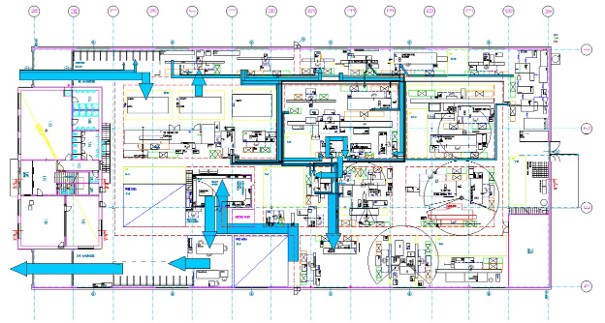
Block layout and material flows
Typical deliverables
Capacity assessment of production processes
Estimation of future space requirements
Design of production and logistics flows
Production layout concept
Block layout of production and warehouse areas
Recommendations for logistics and material handling
Implementation plan for the proposed changes
Key benefits
Greater readiness for production growth
Better utilization of production and warehouse space
Reduction of unnecessary transportation and material handling
Support for investment decision-making
Lower risk when expanding or relocating production
Creating a long-term vision for the development of production and logistics processes
Production should support the company's growth, not limit it.
A well-designed production layout creates room for future development, higher productivity, and more efficient use of investments. Before the need for a new production hall or a major reorganization of production arises, it is advisable to understand the possibilities for further development and have a clear vision of the future state in place.
We use cookies to provide you with the best experience from our website. If you continue to use this site, we will assume that you are satisfied with it.