
Situation
The production plant was preparing for an expansion of the product portfolio and a significant increase in production volumes. The current logistics processes and warehouse space were set up for the current state of production, while future growth was raising questions in the area of warehouse capacity, supply of production lines, organization of internal transports, and dispatch.
Management needed to gain a clear understanding of whether the existing logistics system would be able to handle the planned expansion of production and what changes would be necessary to ensure smooth material flow.
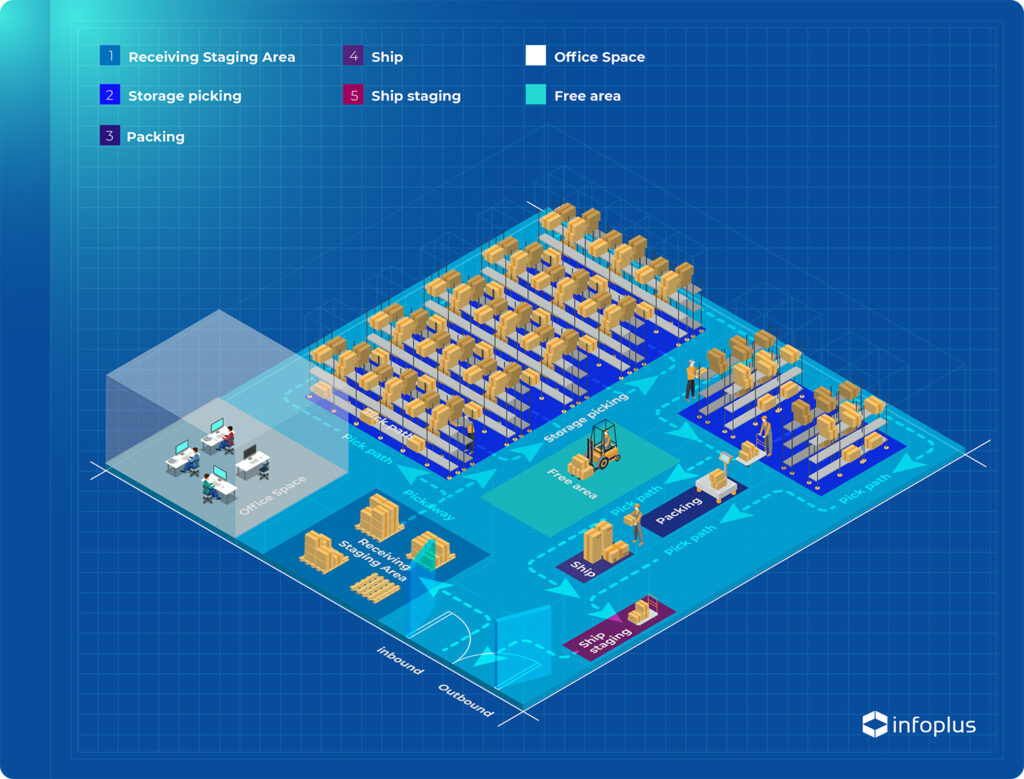
The aim of the project was to design a future concept for internal logistics that would ensure efficient material flow from receipt through to dispatch, create conditions for further production growth, and at the same time minimize unnecessary logistics operations.
As part of the assignment:
- verification of the capacity of existing warehouse space,
- design of a new layout of logistics zones,
- design and sizing of storage spaces,
- setting up the production supply system,
- definition of standards for material handling,
- design of the future material flow between the warehouse, pre-assembly, production, and dispatch.
Solution
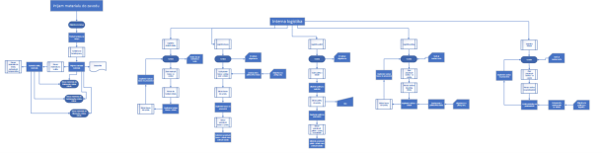
Based on the analysis of logistics processes, a comprehensive design of material flows was created, covering the entire process – from receipt of material, incoming quality control, storage, and production supply through to packaging and dispatch of finished products.
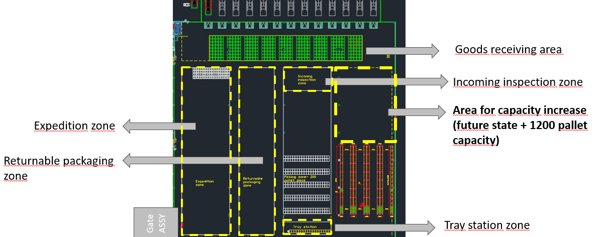
Part of the solution was the design of a new warehouse layout, including a clear division of individual logistics zones. Areas were defined for receipt of material, incoming inspection, pallet storage, picking, small parts, returnable packaging, dispatch, as well as future expansion of warehouse capacities.
For individual material groups, different logistics concepts were designed:
- Kanban system for small components,
- eKanban management for the supply of medium-sized parts,
- Supply of large components via logistics trains (tugger trains),
- Kanban solution for pre-assembly modules,
- Optimized flow of finished products toward dispatch using AMR (Autonomous Mobile Robot) carts.
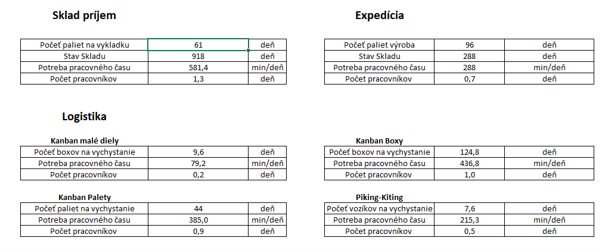
The project also included capacity calculations for logistics resources,the required number of workers, handling equipment and future demands on warehouse space..
Project outputs
The customer received a comprehensive design of future logistics, including:
- warehouse layout design,
- defined material flows,
- logistics standards for individual material groups,
- design of milk-run supply for production lines,
- definition of workstation supply frequencies,
- capacity model of the warehouse and logistics processes,
- documentation/materials for the further implementation of the Kanban and eKanban system.
Prínosy pre zákazníka
Here's the clean version with the HTML tags preserved exactly:
The result of the project was the creation of a clear vision of the future functioning of internal logistics, which enables support for production growth without loss of material flow continuity. The customer received a defined concept for supplying production lines, documentation for decision-making on warehouse capacity expansion, and concrete recommendations for the future implementation of logistics processes.
The proposed solution created the preconditions for higher efficiency of warehouse operations, reduction of non-productive material movements, better utilization of logistics resources, and plant readiness for the planned increase in production volumes.
"The project outputs gave us a clear framework for decision-making regarding future logistics capacities, warehouse space, and the method of production supply. Thanks to this, we gained greater confidence in planning production growth and further investments in logistics."
Logistics Manager
